November 6, 2007

The Diversity of Life

A fascinating book, which describes the miracle of life: how the world came to be as diverse as it is. Wilson has succeeded in giving an entertaining "ecology 101" course by writing such an accessible book. I could not put the book down--and this is coming from someone who managed to get a bachelor's degree from a liberal arts college without taking a single biology course! Had I picked up this book 15 years ago, when it first came out, I may even have become an ecologist! But alas, the two books that changed the course of my life were Eric Wolf's "Europe and the People Without History" and Karl Marx's "Das Kapital", and that is why I am an anthropologist today.

But I digress. The highlight of this book, which begins by demonstration of the resilience of ecosystems, is Wilson's account of how species are born and how, in 3 billion years, came to be as diverse as it is now. He then moves on to describe extinction of species--over 98 % of all species that ever lived are now extinct, but the world is currently at the peak of biodiversity. Wilson's depiction of the "unmined riches" of nature is also fascinating. In the last chapters of the book, Wilson tells us, in a rather preaching tone, that we must save the world's biodiversity from going extinct, and provides some concrete (but rather ambitious) actions that can be taken do so.

The only problem I had with the book is the species-centric view of the world; as is typical for books written by ecologists, people are described only as destroyers of nature, and a description of the rich interactions between humans and nature is only given two pages in the 400-page book.

This book should be compulsory reading for all those politicians and CEOs of multinational corporations, who are not convinced that we need to take immediate actions to conserve the environment. After all, as a Sengalese conservationist is quoted in the book, "In the end, we will conserve only what we love, we will love only what we understand, we will understand only what we are taught".

tick, マダニ, tique

Last night, I found what appeared to be a white sesame seed on my arm. I tried to brush it off, while wondering to myself, when was the last time we cooked with sesame? The sesame seed would not budge, and upon closer inspection, I found to my dismay that it had LEGS on it. I called my partner, who recognized it as a tick.

Yuck.

The problem came next: what to do? My partner, whose primary language is Japanese, learned via Japanese wikipedia that I should not remove it, but rather, see a dermatologist as soon as possible. He then proceeded to apply alcohol, in an attempt to drown it (he found this on the internet, too). When I searched the internet in English, I found that I should remove it ASAP. The French-language wikipedia warns AGAINST application of alcohol, as it may irritate the tick to the point of regurgitation of bacteria into the bloodstream. What to do?

Now, having obtained two degrees in anthropology, I know that illnesses are perceived and cured differently around the world. Also, it is most likely that the ticks that exist in Japan, the US and in France are different and thus require different approaches. But I was not prepared for such divergent options offered to us via the resources available.

Needless to say, we promptly put poison (in the form of frontline, a product for flea and tick control) on our beloved dog last night, the most likely culprit of this whole mess. I also must monitor myself carefully to make sure that I do not succumb to some infectious disease. Wish me luck!

November 5, 2007

Hocus Pocus

An intriguing tale of the life of a man currently awaiting trial for masterminding the greatest prison break in American history. His reminiscence takes us back to his high school's science fair, which led him to a career in the US Army that took him to Vietnam; then as a professor at a school for the learning-disabled; then as a teacher, then a warden, of a prison. During his life he fathers a son about whom he does not find out until the day he is arrested; marries a woman with a strain of insanity on her mother's side of the family, which becomes evident when her mother, then herself, becomes crazy at middle-age; he has numerous affairs with women (the number of women he has slept with is exactly the same as the number of people he killed during the war in Vietnam, which happens to be a lot).

Vonnegut's impeccable sense of dry humour makes this book a joy to read: World War II is referred to as "Finale Rack of so-called Human Progress"; foreign businesses buying American land, enterprises and facilities are called "an Army of Occupation in business suits"; and the modern times are descibed as human beings "killing the planet with the by-products of their own ingenuity". Here's my favourite: Harvard Business School is full of "movers and shakers who were screwing up our economy for their own immediate benefit, taking money earmarked for research and development and new machinery... and putting it into monumental retirement plans and year-end bonuses for themselves". It thus comes as no surprise to find that Vonnegut was a humanist and has criticized the Bush administration and the Iraq war.

I only became interested in Kurt Vonnegut's books after I read his obituary after his death earlier in the year: it turns out that we had two things in common: one, that both of us had obtained our MA in anthropology; and two, neither of had decided to get a PhD in anthropology. I found "Hocus Pocus" an enjoyable read, much more entertaining than his more famous "Slaughterhouse-Five". I look forward to reading more of his books.

Animal, Vegetable, Miracle: A Year of Food Life

A truly delicious read (literally! Reading this book made me constantly hungry, I recommend that you only pick up this book when you are full, after a home-made meal of locally bought products) that traces the four seasons during which a family of four ate only local vegetables and animals. The year of eating local begins in spring, when the asparagus shoots emerge from the ground; thereafter, the family subsides, as much as possible, only on what they harvest or collect from their farm, what they can purchase at the local farmer's market, and what their friends give them. This takes us through seasonal eating of heirloom vegetables, potatoes, wild mushrooms, carrots, chickens and their eggs, cheeses, tomatoes (lots of them!), turkey, and pumpkins. Kingsolver, with her husband, does not neglect to give us lessons on why we should eat organic or local foods that are in season—the implications of food traveling 1,500 miles to reach our dinner table, genetically modified crops, the problem of overfed but undernourished Americans, concentrated animal feeding operations (CAFOs), subsidies paid to keep "conventional" industrially grown foods cheap—and why we should cook our meals from scratch and avoid, as much as possible, eating processed foods. In beautiful prose, Kingsolver also takes us through her trips to north-eastern part of North America and Italy, and the slow food movements there. We learn that aside from the rare items (such as fair trade coffee, wheat grown out of state, and breakfast cereals), the family succeeds in their efforts—and saves money in the process.

Kingsolver makes a case that organic food should not be seen as an elite privilege; penny-pinching should not be "an accepted defense for toxic food habits, when frugality so rarely rules other consumer domains". We also learn that liberation of women from the home into the workforce, but WITHOUT the liberation from housework, has meant that less and less food is cooked at home—as Kingsolver notes, nobody looks forward to cooking at the end of a long day—and this is where a profiteering industry comes in: “hey ladies... go ahead, get liberated. We'll take care of dinner”. But cooking is not only "the great divide between good eating and bad"; "home-cooked, whole-ingredient cuisine will save money" and also "help trim off and keep off extra pounds". How could we possibly argue against that?

My only problem is that Kingsolver mentions next to NOTHING about the problems of eating fish and seafood—such as overharvesting and depletion of fish, the dangers of eating large ocean fish as well as fish from most rivers in the US due to toxic poisoning, and aquaculture and its negative effects on the environment, to name a few. She mentions that when she and her family denounced CAFOs, they would only order vegetarian or seafood menus when they ate at restaurants, but the cultivated shrimp typically found in American restaurants are just as likely to have had negative environmental impacts and ethical concerns as CAFOs. But the book is, as the title suggests, about animals and vegetables, and another whole book would have to be written to delve into such issues. Kingsolver is one of my favourite authors since I first read her work as a college student in the U.S., and I have read almost all of her books. In particular, "Prodigal Summer" and "Small Wonder" deal with topics that I can really identify with. "Animal, Vegetable, Miracle" will be an addition to my bookshelf that I am likely to pick up often, whenever I need an inspiration—whenever I am tempted to succumb to eating out or order take out, after a long day at work.

October 27, 2007

bisou: a French greeting

For over three years now, I have been living in a continent where people kiss each other in greeting. I must admit that I am not such a great fan of bisou-ing. In other places that I have lived, people variously hug, shake hands, bow, or wave. Although non-contact greetings are not very personable, I think hugging is just as intimate but more hygienic. But alas, this is the state of affairs here, and as a good respectable global citizen, I comply with the local custom.

When we bisou in greeting, it usually takes the form of cheek-to-cheek, where we kiss the air; in Paris we do this twice. In other European countries where I have travelled for work (the Netherlands, Poland, Belarus, Ukraine) it is done three times.

What bothers me particularly, and what has promopted me to write this today is this: SMELL and WET SPOTS. First, perfume (and aftershave) are used amply in this continent in order to obscure body odour, and being sensitive to smells, it bothers me quite a bit that I must wear traces of other people's aftershave/perfume all day. Second, moist-kissers, who tend to be lip-to-cheek-kissers (i.e., instead of kissing the air next to your cheek, they actually put their moist lips on your cheeks!). After greeting moist-kissers, who tend to be middle-aged or older men, I end up having WET SPOTS on my cheeks, which, together with the various SMELLS mentioned above, I must wear ALL DAY. Needless to say, the first thing I do when I get home is to thoroughly wash my face!

At this time of the year when many people are coming down with one sort of bug or another, I strongly advocate that the government ministry in charge of health and sanitation should study the relationship between bisou-ing and spread of infectious diseases like the flu, and one day, enact a total ban on bisous!

October 19, 2007

ストライキ 2日目。

フランスでは昨日と今日、ストライキ。公共交通機関(メトロ・バス・トラム・鉄道)がストップしているか、数が極端に減っています。 今朝7:30頃起きて外を見たら、もうすでに車は渋滞。自転車・歩行者もたくさん。ニュースを聞かなくても、今日もストが続いているということがわかる。私が乗るメトロの線は、何本に1本かは動いているという情報もあったけれど、人が多い電車に乗るのも嫌なので(パリ住民は東京などと違って、混雑に慣れていないので、混雑電車はすごい利用しにくい)、今日も歩いて通勤することにする。家と職場の間は、片道徒歩40分。

このストで困るのは、職場に来る人が極端に減ること。専門職の人はほとんど出勤するが、事務職の人は無理して出勤してもしょうがないと思うらしく、来ない。そうすると、アドミンの仕事が全く進まない。今日話を聞いたら、こういう事情の場合、有給手続きをとらなくていいらしい。だから、無理して出勤したほうが損するわけ。

逆にこのストでラッキーなのは、アパルトマンの裏にある線路に電車(RER)が通らないので、とても静か。

基本的に、ストライキをする権利は尊重している。けれど、今回は、サルコジ大統領の年金改革に反対しているらしく、具体的には、公共サービスセクターの年金制度を、受給資格を勤続37.5年から40年にするという改革に反対しているらしい。なんだか、あんまりこのストライキに同情できないのは、私だけでないはずです。

October 17, 2007

ブリュッセル出張

4月の最終金曜日、Bruxelles でワークショップがあったので、週末を利用して Bruxelles と Bruges を旅行しました。

Bruxelles で訪問したのは、世界一美しいプラザといわれる Grand-Place、そこを面している市役所と博物館、Le Sablon、美術館、など。教会や古い建物もたくさんありました。

最初の写真は、Bruges。ここは「北のベニス」とも呼ばれているようで、中世の町並みを運河が通る、とてもかわいらしいところでした。 二つ目は、Bruges の Market Square。背景にあるのは中世スタイルに建てた、カラフルな建物。

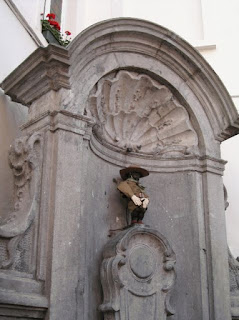
最後の写真は、Manneken-Pis。意外と小さく、なにしろ人が多かったので、あやうく見落とすところでした。
あと、やはりブリュッセルと言ったら、チョコレート。パリより安いので、たくさん買って帰りました。ワークショップで一緒だった地元の人に聞いたら、Godiva は庶民が食べるもの(!)。地元の人はちょっと贅沢するときは、Neuhaus(http://www.neuhaus.be/150/)を買うそうです。また、Piere Marcolini(http://www.marcolini.be/)もなかなか美味しかったです。二つとも、日本にもお店がありますね。