February 12, 2013

東ティモール出張

東ティモールへ出張に行きました。今回で4回目の東ティモールですが、2012年12月に国連東ティモール統合ミッション(UNMIT)が撤退してからはじめての出張。今回、気づいたことがいくつかあります。

まず、空港を出てから、タクシー(白タク?)の運転手達にとてもアグレッシブに アプローチされました。いつもの運転手さんに迎えにきてもらっていたのですが、お互い認識するまでに約10秒。それまでに、3、4人の人たちに近寄られ、あやうく荷物まで持っていかれそうになりました。インドネシアの観光地の空港ではこんなことよくあるものの、今まで東ティモールでこんなこと経験したことが無かったので、びっくりしました。同様に、ホテルや道で出会う物売り(フルーツや土産品、携帯のプルサなど)。今までは笑顔で "no, thank you" というとすぐ離れて行ったのに、今回は車のドアを閉めても、窓の外からしつこくアプローチしてきました。UNMITの撤退により5-6000の東ティモール人(の仕事)が影響されたという話を現地NGOの人に聞きました。今までディリで身の危険を感じたことが無かったのですが、このような不安定な状況の中、気を抜いてはいけないということでしょう。

今回は、ディリから25キロ北にある、アタウロ島に行きました。


Fisherwoman mending net on Atauro Island, Timor Leste © Blanca

 アタウロ島民のほとんどは、漁師です。島には電気が一日6時間しか通らない(しかもすべての村にあるわけではない)ので、食料の長期保存は困難です。ちょうど日本の干物みたいに、海辺では魚を干していました。

Fish drying on Atauro Island, Timor Leste © Blanca
また、この島で有名なのは、この Bonecas de Atauro。大きな部屋の中と外、合計約15名の女性が、人形やバッグ、テーブルクロスなどを作っていました。特にミシンを使った刺繍の技術はかなり高度。オーストラリアなどに輸出しているようです。このかわいい人形は、ディリでのお土産屋でも手に入ります。
Women making dolls at Bonecas, Atauro Island, Timor Leste © Blanca

泊まったのは、Barry’s Eco-lodge。電気も水道も通っていない(部屋にはベッド、蚊帳、たんす、電球が1つと小さな扇風機があるだけ。外に、共通のコンポスト・トイレと、水浴び用のバスルーム(mandi)がある)、ベーシックな施設です。夜はとても静かで、空を見上げるとすばらしい星空。これだけ星がきれいにたくさん見ることができたのは、ずいぶん久しぶりでした。島には他に食べるところがないし、移動手段もないので、3食出ます。質素ですが、美味しい料理に、満足しました。

アタウロ島までは、一週間に1回出ているフェリー(片道5ドル、土曜日朝ディリ発、午後アタウロ島発)か、スピードボート(片道45ドル、1時間)で。行きのボートでは、イルカに遭遇しました。クジラを見かけることもあるようです。

View of Barry's Eco-lodge, Atauro Island, Timor Leste © Blanca
Dolphins on the way to Atauro Island, Timor Leste © Blanca
ぜひまた、家族で一緒に行ってみたい場所です。
 

November 30, 2011

A sojourn at the hospital

Neo-natal intensive care units are, by their nature, very depressing places. Not that other hospital units aren’t depressing, but there’s something more depressing about seeing tiny beings hooked onto tubes and monitors, surrounded by constant beep-beeping of medical equipment.

It’s all the more depressing if your child is in it.

It was just over three years ago that my daughter June spent nearly 10 days in such a room at a French hospital. Recounting the experience, which followed an even more traumatic birth experience, still brings tears to my eyes. And now I am in a déjà vu situation. I have been forced to such a unit, this time in Jakarta, for my son. He is sleeping soundly, between another small baby with a fever and a huge baby with a deformed head with a sickly pallor not unlike cement. Not a happy place to be. Not a place I’d imagined he’d be spending, after an ideal birth 20 days ago.

Unlike my daughter’s birth, which was a medicalized experience and a hugely disappointing one, it was such a relief to have had an ideal birth for my son. Bloody show at one day short of 38 weeks, labour starting naturally in the middle of the night (and allowing me to sleep for six hours or so) two days later, which got so strong by 8 in the morning the following day that I rang my ob/gyn. By the time he examined me at a clinic I was 3cm dilated. I headed towards the hospital, where, less than 2 hours after my arrival, my son was born. The pain was immense of course, and all the breathing techniques I’d learned went out the window, but with the help of the nurses, my ob/gyn, and my husband, I was able to give birth without the help of any pain killers. No induction, no epidural, no episiotomy—the perfect birth experience. Since I have an aversion to hospitals (and especially the food served there, yikes!), I managed to get permission from both my and my son’s doctors to have us discharged the next day. Breastfeeding started off well, my milk came in 3 days post-partum, my baby was gaining weight really well… then all of a sudden, fever stroke. Low-grade fever, but all parenting books say any fever over 38 degrees celsius in a newborn should be treated with caution. So I took him to a clinic, and this is how we’ve ended up back in the hospital where I gave birth.

My son has had blood and urine tests done and cultures taken to rule out signs of bacteria or any other harmful infections. The paediatrician doesn’t know what the problem is—only to say that because fever goes down every time antibiotics are given, it’s probably a bacterial infection. It breaks my heart to see my son in the hospital. What on earth is going on inside this tiny body of his? The only thing I can do for now is to give him the nourishment he needs—my breast milk—and hope that he will get better soon.

November 13, 2011

Hello world!


Hello! I am Sky, Blanca's son , and I was born on Indonesian Hero's day, 2011. I was so ready to come to this world that my mum (and her driver) was worried that I'd be born in the car on the way to the hospital! Fortunately for Mum I was pretty small at 2.6kg, had I been any bigger I'm sure she would have really suffered. Everything went well and I was able to go home the next day and meet my bigger sister, June. She gave me a nice present that I'll use as my doudou!

That's it from me now. Bye!

April 13, 2011

The saga continues


The nuclear crisis is far from over. It was extremely depressing to read yesterday that the rating of the severity of the accident in Fukushima has been raised to 7, the worst on an international scale, to the same level as the Chernobyl accident in 1986.

A report in the New York Times reveals that:

The nearly monthlong delay in acknowledging the extent of these emissions is a fresh example of confused data and analysis from the Japanese, and put the authorities on the defensive about whether they have delayed or blocked the release of information to avoid alarming the public.

They wanted to avoid alarming the public? I mean, doesn't the public have the right to know, the right to have information in a timely manner? The public can decide for themselves whether they will be alarmed or not.

As I was reading an article in Conservation Magazine that discusses BP's Deepwater Horizon disaster last April, the description of what happened (i.e., how BP and the US government did not make public some vital information concerning the disaster) are strikingly similar:

For several weeks
after the Deepwater Horizon rig collapsed last April 18, nobody knew how much oil the busted wellhead was releasing into the Gulf of Mexico—only that the quantity was huge. Without that critical data point, there was no way to gauge the growing size or potential impact of the disaster. Yet the people in charge of stopping the gusher seemed curiously uninterested in knowing the extent of the damage. BP declined to provide any estimate of the volume of oil erupting into the sea, saying it made no difference in their plans to cap the well or clean up the spill, while NOAA offered only a single estimate of 5,000 barrels per day.

The lack of reliable information on an enormous, unfolding disaster made little sense to many scientists and engineers following the news...

... Large-scale disasters almost always overwhelm government agencies. Bureaucracies are accustomed to moving slowly. And when they try to move fast, they hit red tape, turf conflicts, and political obstacles. And large oil companies (or other private organizations) will safeguard their own interests before the public’s... Worse, to minimize political or economic fallout, those linked to a disaster often downplay the severity of the situation or spin it to their own ends.

It depresses me to no end that we seem to be incapable of learning from our mistakes.

Image taken from http://www-ns.iaea.org/tech-areas/emergency/ines.asp

March 22, 2011

Nuclear crisis continued

The past week has been a difficult one for me. I am surprised to find myself distracted very easily and frequently, making it difficult to concentrate on anything but the news in Japan. I think it is fortunate that we do not have cable TV. Last week I visited a Japanese friend who had her TV on to CNN, and during the short time I was there, horrific images were replayed over and over again. I am glad that I do not need to unnecessarily expose myself, and my daughter, to such violent images.

My primary information source is from the internet. The problem with the internet is that there is too much information available, and we never know what political or sensationalist agenda is behind each piece of information. The good thing about the internet is that we can find all different kinds of news and views. According to numerous internet sources, amounts of radioactive material have been detected in water, milk, and vegetables such as spinach, not only from Fukushima but in Tokyo, 220 km away. However, the Japanese government is informing the public that "the radiation levels exceeded the limits allowed by the government, but the products 'pose no immediate health risk'" (The Guardian, 19 March). According to the CNN, the World Health Organization has also declared that "short-term exposure to food contaminated by radiation from Japan's damaged Fukushima Daiichi nuclear plant poses no immediate health risk". But really, the question we should be asking ourselves is this: what is meant by "no immediate health risk"? What exactly are the reasoning behind these statements?

As an anthropologist who has documented the human environmental impact of nuclear weapons testing wrote in a commentary: "In this nuclear world, what is the meaning of 'safe'?" To quote a little more from her:

In a nuclear crisis, life becomes a nightmare for those people trying to make sense of the uncertainties. Imaginably, the questions are endless. Radiation is invisible, how do you know when you are in danger? How long will this danger persist? How can you reduce the hazard to yourself and family? What level of exposure is safe? How do you get access to vital information in time to prevent or minimize exposure? What are the potential risks of acute and chronic exposures? What are the related consequential damages of exposure? Whose information do you trust? How do you rebuild a healthy way of life in the aftermath of nuclear disaster? And the list of unknowns goes on. These questions are difficult to answer in the chaos and context of an ongoing disaster, and they become even more complicated by the fact that governments and the nuclear industry maintain tight control of information, operations, scientific research, and the biomedical lessons that shape public-health response. This regulation of information has been the case since the nuclear age began, and understanding this helps to illuminate why there is no clear consensus on what Japan's nuclear disaster means in terms of local and global human health.


Another worrisome development closer to home is this one: that "despite growing opposition sparked by the ongoing nuclear crisis in Japan", Indonesia is proceeding with plans to build four nuclear reactors (IRIN, 21 March). This brings us to the question so aptly posed by an op-ed in The Washington Post: "If the competent and technologically brilliant Japanese can’t build a completely safe reactor, who can?"

But the Japanese, just like anyone else, make mistakes. Just this morning I read that people who had escaped in officially designated higher-ground shelters to escape the tsunamis were swept away, because such shelters were designed with 5.5m-high waves in mind, and the actual waves that engulfed the coasts of north-east Japan were up to 7.3m (JMA 2011). It's also reported that just a month prior, government regulators "approved a 10-year extension for the oldest of the six reactors at the power station" and that after the extension was granted, The Tokyo Electric Power Company admitted that "it had failed to inspect 33 pieces of equipment related to the cooling systems, including water pumps and diesel generators, at the power station’s six reactors.

I do not know if humans are capable of building "completely safe" nuclear power plants. So long as humans are capable of making mistakes, I suspect not. I hope we do not have to face another nuclear disaster to find out.


March 14, 2011

A social-natural disaster


Ever since the massive earthquake hit north-eastern Japan on 11 March, my email and SMS inboxes have been flooded with concerns from friends and colleagues. Living in a country where hazards strike and often turn into devastating disasters, I am not surprised to hear expressions of concern coming from strangers--shop keepers that I meet for the first time, for example.

Fortunately, no family member or close friends have been hurt directly from the earthquake and the ensuing tsunami. My parents' dog may suffer from a urinary track infection, as his daily walks have been limited due to temporary stopping of the elevators in my parents' 26-storey apartment building in central Tokyo. Another family member living in Tokyo had to walk 4 hours to get home, as the train services were stopped. But these inconveniences are minor compared to the damage and suffering of people directly affected by the earthquake and tsunami. My thoughts are with them.

At the same time, I worry immensely about the developments surrounding the nuclear power plants in Fukushima. State of nuclear emergency has been called, with six reactors reportedly having difficulties with their cooling systems (14 March, Sydney Morning Herald). I am not sure if we should be consoled by comments from experts who say that a partial meltdown "is not a disaster" and a complete meltdown is not likely (14 March, Reuters). What bothers me is the conflicting and contradictory information I am seeing in the various media, in Japanese and in English. In addition to the confusion, there is obviously much covering-up going on, and the truth to the extent of damage may only be uncovered later.

Having lived in two of the top ten countries with a high reliance on nuclear energy (France gets nearly 80% of its electricity from nuclear power, while Japan's is 30%) (IAEA 2008), I cannot pretend to be a simple bystander to the whole issue.

The nuclear crisis in Japan is literally adding fuel to opposition to building of new reactors around the world (13 March, Beyond Nuclear). In Germany and Switzerland, plans to build or renew nuclear power plants are being and suspended (14 March, the Guardian).

The advantage of nuclear energy is that it does not produce smoke or carbon dioxide, so it does not emit greenhouse gasses (Darwill 2010). It has been touted by many a viable option to reduce our greenhouse gas emissions. However, the question we should ask ourselves is this: do we want to resort to nuclear power to combat climate change?

In addition to problems such as environmental pollution (radioactive contamination and nuclear waste disposal) and concerns over safety such as those we are currently facing in Japan, the fundamental issue we should be considering is that “nuclear power is often nothing more than a way to avoid changing anything” (Solnit 2007). Nuclear power plants, like power plants that rely on fossil fuel, retain “the big infrastructure of centralized power production and […] the habits of obscene consumption that rely on big power”. Simply substituting nuclear with fossil fuel is not changing the fundamental problem we have: our increased need for energy.

Nearly ten years ago, I had a conversation with Prof Akio Morishima, former President of the Central Environmental Council of the Environment Agency of Japan. After learning that he spent much of his career fighting for victims of environmental pollution during Japan’s rapid economic growth in the 1960s and 70s, I was surprised to hear that he supported the development of nuclear energy. While admitting that nuclear energy is problematic, he asked, "but what are the alternatives?" The possibility that our increasing need for energy could be curbed had not occurred to him.

The challenge we thus face is this: to fundamentally change the way we live and suppress our insatiable energy use. Unless we do so, it is unlikely we can stop climate change. And that, in my opinion, is what makes climate change an extremely contentious issue.

I will be closely following the developments surrounding the nuclear power plants. This is a human-made disaster following a geological disaster.

Top photo taken from http://www.smh.com.au/environment/bigpics/japan-disaster, subtitled "Houses are swept by a tsunami in Natori City in northeastern Japan on March 11, 2011".

March 10, 2011

Candi Borobudur

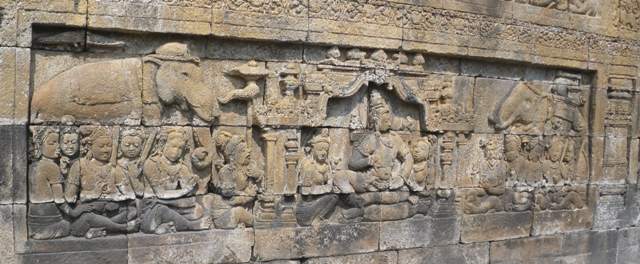
ユネスコの世界遺産に登録されているボロボドゥール寺院遺跡群は、ジョグジャカルタから40キロくらいはなれていて、車で片道1時間かかります。Alam Bahasa 語学学校のフィールドトリップとして、行きました。8世紀に建設されたこの寺院は、仏教のもの。3壇に分かれていて、階段とドアが東西南北各方向にあり、正面がありません。下の2壇にはとても細かい、仏教説話にもとづいたレリーフが彫られていて、欠けているところも多いものの、見事でした。一番上の壇には仏塔と仏像がありますが、一番上までには、2011年6月まで行かれません。2010年のムラピ山噴火と影響で灰の被害を受け、現在清掃中だからです。ユネスコのこれに関する記事は、ここを参照。

語学学校の先生の説明はインドネシア語と英語が混ざっていて残念ながら全て理解することができませんでしたが、ボロボドゥールの近くには2つの他の寺院があり、この3寺院は一直線に並んでいるそうです。また、インドネシアにはこの寺院が建てられた後、ヒンズー教が紹介されたけれど、カースト制がインドネシア人には合わず、後に入ってきたイスラム教が定着したそうです。

黒灰色の寺院と、周りの豊かな緑、そして空の青のコントラストが印象的でした。


平日に行ったので一般的な観光客はそれほどいませんでしたが、遠足の学生がたくさん。観光客が多いから週末を避けるようアドヴァイズされましたが、平日もかなりの数の子供達がいました。また、とても暑いので朝早めに行くのがいいですし、帽子または日傘が必需品です。インドネシアに住んでいる証明ができるKITASがあると、入園料が安くなります。

また、安物のお土産を売る人たちに付きまとわれるのと、出口にあるお土産屋の多さには、ちょっとびっくりしました。インドネシアの観光地の出口にはかならずたくさんのお土産屋があり、それを通らないと出られません。店の人たちはかなり強引に声をかけてきます。

2002年にカンボディアのアンコール・ワットに行きましたが、それと同じくらいくらい感動した場所でした。

Yogyakarta での語学研修

2月、2週間語学研修のためジョグジャカルタに滞在しました。これは私の職場が半分負担してくれる研修制度で、新しく来イした外国人職員がそれを受ける権利があります。インドネシアに来て10ヶ月、ようやく研修に行く余裕ができました。実際のところインドネシア語ができなくてもジャカルタでの生活にはそれほど不自由しないといのですが、やはりちょっとは知っておくと当然便利。ほんのちょっとだけでも現地語で意思疎通ができるようになるのは現地人に対する礼儀ですし、よかったです。

ジョグジャカルタといえば、ジャヴァ文化の中心地。バティック(更紗)や影絵芝居でも有名ですし、ボロブドゥール遺跡やプランバナン寺院群などの遺跡もあります。市内にはクラトンと呼ばれるスルタンの宮殿や水の宮殿もあります。

ジャカルタよりずいぶん規模は小さい町ですが、車やモーターバイクの量の多さは同じくらいに感じました。ただ、小さい分歩きやすい環境でした。毎日ホームステイ先から語学学校まで1キロくらいは歩き、健康的な生活を送ったような気がします。

我々が通った語学学校 Alam Bahasa は、主にマン・ツー・マンの授業で、一日6時間、2週間で合計60時間のコースをとりました。1日2時間の授業が3回、毎授業先生が変わります。最初の週は6人の先生がいて、それはちょっと多すぎるということで2週目は先生を4人に減らしてもらいました。ここの先生、上手な先生も多いのですが、あきらかに慣れていない先生もいて(アルバイトに多いよう)、それはちょっと残念でした。また、毎日すごい量のボキャブラリーを学ぶので、毎晩苦労しました。この60時間コースを修了すると、「Communicative Beginner」の修了証をもらいますが、まあ正直言って、このコースを修了して初めてインドネシア語の奥深さを知ることができた、という感じです。とりあえずタクシーや買い物、レストランで注文するのに不自由しない程度のレベル。

ジョグジャカルタ滞在中は、ヘルさんの家でホームステイしました。ここはホームステイというよりは、下宿という感じ。合計12の部屋に、主に語学学校の生徒(我々が通った Alam Bahasa と、ライバル校の Wisma )が泊まっています。外国人が多いため、またホストファミリーが皆英語ができるので、あまり語学のためには効果がなかったのです。が、とても料理が美味しく、毎日夕飯を楽しみにしていました。

これからは、滞在中訪問した観光地の情報をアップしていく予定です。

photo taken from http://www.yogyakartadiscovery.com/

January 5, 2011

Missing Daddy

I spent most of the day feeling guilty yesterday. I made my daughter cry, over a trivial thing. The lesson I have learned is: never rush a strong-willed girl, even on a morning when there are a million things to do and there are only 10 minutes left before rushing out the door!

My partner has left on a trip for nearly two weeks, thus leaving me, June, and the dog to take care of ourselves. So it's me that has to get everything ready in the morning, and drop June to preschool before going to the office. Yesterday, June took her time eating breakfast, thus little time was left for me to get other things done. I needed to go upstairs to get something I'd forgotten, so I thought I'd just carry June with me and get it quickly before coming back downstairs again to get everything ready for departure. But alas, nothing is that simple these days with a two-year old!

First, she refused to move from the sofa, as she wanted to listen to her favourite nursery rhymes ("music on!"). When I managed to coax her into going upstairs, June insisted that she walk up the stairs (clock is tick-tick-ticking!). And then she wanted to look carefully at all the photos displayed in the stairwell (tick-tick-tick). And ask me questions about the photos (tick-tick!). And then, more questions (tick-tick-tick!). At which point, I just picked her up to rush up the stairs. Next moment, a huge howl from June: "Daaaaddyyyyyyy!!!'. Tears fall down her cheeks.

Of course Daddy is more patient. He probably would have allowed June to ask all the questions she has about the photos, even though she has already asked the same ones a million times. He would also wake up earlier so that he does not have to rush. But then, he does not have to put on make-up and get ready for the office at the same time getting June ready for preschool!

I am sorry, June, for being an impatient mother. But I am doing my best. I know you miss Daddy, but so do I.

January 3, 2011

あけましておめでとうございます / Happy New Year / Selamat Tahun Baru 2011


2010年9月下旬以降は、日本一時帰国、アフリカ、アメリカ、マレーシア、東チモールへの出張があり、ブログの更新がなかなかできなかったことを反省しています。2011年はより定期的に、ジャカルタやインドネシアに関することをアップデートしていきたいと思っています。2011年が皆にとって、よい年になりますように。

My new year's resolution is to explore and learn more from what Indonesia has to offer.
May the year 2011 be filled with new discoveries for everyone!

September 13, 2010

ラマダンとイド・アル=フィトル(レバラン)

フランスに引越して初めて目の当たりにした、イスラム教の断食。パリにもたくさんイスラム教徒(主に北アフリカ出身)がいますが、それほど厳しくないようで、断食をしっかり1ヶ月している人は周りにあまりいませんでした。


イスラム教徒を抱える国としては最大のインドネシアでは、当然多くの人たちが8月11日から9月9日までの1ヶ月間、断食していました。

町の変化としては、
  • 旗 :主にインドネシア国旗の白・赤のものでしたが、それ以外にもカラフルな旗が街一杯に飾られていました。

  • 渋滞:毎日夕方6時前後の断食明け時間に合わせて帰宅する人が多いため、道路がとても混みました。普段は4時から4時半ころ職場を出ていましたが、ラマダン中は4時を過ぎると(6時過ぎまで)混み始め、普段2-30分くらいしかかからない道のりが、早くても45分、時には1時間半以上かかることがありました。

  • 爆竹と花火:日没後の夜食の時間に、とても騒がしくなり、爆竹が毎日聞こえます。おかげで我が家の愛犬はストレスで、自分のお腹の毛を食いむしってしまいました。

  • その他の騒音:夜遅くまで、また早朝からモスクのアナウンスが大きい。特に9月9日の夜から10日の朝にかけては、ノンストップで歌やコーランの朗読やが聞こえてきました。また、日の出前の食事の準備する女性達を起こすため、3時前後に太鼓を叩いて街を歩く人たちがいたため、うるさかった。

  • レストラン:通常のように営業しているかちょっと気にしていましたが、心配無用でした。大きなモールのフードコートやレストランは、お客さんでごった返し。金持ちのイスラム教徒は断食を実行しない(または挫折する)という話もあるし、クリスチャンや仏教徒も多いのでしょうか。中華料理レストランでビールを頼んだら、急須に入って出てきたのにはびっくりしました。

身の回りの変化としては、

  • 職場の現地職員が早く始め、早く終える:お昼時間をとらないということで、ほとんどの現地スタッフが朝7時から午後3時での勤務時間。午後6時には、オフィスに誰もいなくなりました。お昼ごはんもなんとなく、隠れるように食べていました。

  • お手伝いさんの勤務時間:断食明けの時間の午後6時には仕事を終わりにできるよう、勤務時間をちょっとだけずらしました(運転手さんはいつも5:30で終わりなのでそのような調整は無)。また、事情による夕方6時以降働いてもらう際は、6時から30分、休みにした。また、極力彼らの前では飲食を控えました。

今年のレバランの祝日は、10日(金)・11日(土)だったので、ロングウィークエンドとして都合がよかったです。運転手さんやお手伝いさんが里帰りするため1週間休暇を与えました。その間私は自分で車運転して勤務。前もって食材を確保し、ほとんど外出しませんでした。金持ちのインドネシア人は、レバラン中、メイドさんがいなくなってしまうため、ホテルに泊まったり外国へ旅行したりするそうです。そのため、街はガラガラに空く、と聞いていました。

我々はこの時期、ジャカルタに残りました。土曜日の昼、食事するために外出しましたが、それ以外は家でのんびり。土曜日は車の量は少ないものの、がらがらという印象ではありませんでした。特に木曜日の夜は外出するなと注意されていたので外には出ませんでしたが、主な道ではパレードが行われていたようです。外は騒がしかったですね。我々が住んでいる外国人向けのコンパウンドでは、みんなロングウィークエンドを楽しんでいる、という感じでした。

いずれにせよ、早く平常な生活に戻ってほしいものです。

Photo taken from http://www.asajikan.jp/wmphoto/reporter66/archives/20

September 6, 2010

Pelabuhan Ratu の Ocean Queen Resort

また行ってきました、海への週末旅行。今回はジャカルタから南へ Pelabuhan Ratu まで下りました。泊まったのは、この漁港から西に10キロちょっと離れたとこにある、Ocean Queen Resort。この近辺にはいくつか外国人向けのリゾートがあるのですが、7月に行った Tanjung Lesung Sailing Club と同様、ここも Family Guide to Jakarta で推薦されていたし、なにしろ海の目の前のロケーション、犬OKということで、ここに泊まることにしました。

ここのビーチは波が強く、ちょっと泳ぐには適していませんが、バンガローのテラス、または砂浜にあるバンガロー専用の東屋に座っていると、波の音に癒されます。バンガローに配属されているハウスボーイが、Pelabuhan Ratu の魚市場まで買い物へ行き、ロブスターや魚、えびやいかなどをBBQしてくれるのが最高!また、ハウスボーイ経由でお願いすると、一時間なんと 40,000 IDR(約3,700円)でマッサージを体験。とても気持ちよく、金・土と2回もお願いしてしまいました。バンガローは広く、シャワーはお湯が出るし、キッチンも整っている(2つのガスコンロ、冷蔵庫・冷凍庫、食器や料理道具など)施設は快適でした。プールも広く、子供用のプールもあって、家族で楽しめました。

残念だったのが、レストランの食事。美味しくないだけでなく、食器が洗剤臭く、2回食べてあきらめました。バンガローにキッチンがあるので食事はBBQだけにし、自炊するのが無難でしょう。あと、蚊が多いのに蚊帳がなく、エアコン付きのバンガローで締め切っていたのに、蚊に悩まされました。深夜2時過ぎまで騒いでいる若者や、プールの入りながらタバコを吸ったりお酒を飲むマナー違反の人たち、バンガローのすぐで物を売る子ども達もちょっとうるさかったです。残念。私のTrip Advisor のこのホテルのレビューはここを参考。

ジャカルタの生活は意外とストレスフルなので、1ヶ月に1回は週末旅行をエンジョイすることにしようと思っています。今回の Pelabuhan Ratu はジャカルタから来るまで4時間半、170キロ(細い道を使って近道すると150キロ)。そのうち高速は1時間ほど。高速降りてから途中で渋滞する町が2つあるのと、中間地点で休憩が取れるところがないので、ちょっと行き辛いです。また、ビーチも子どもと楽しく水遊びという感じではないのが残念。Pelabuhan Ratu と Ocean Queen Resort の間にある、Samudra Beach が一番静かなビーチということですが、それでも波はあり、娘は残念ながら水に入りたがりませんでした。彼女がもうちょっと大きくなるまでは、この海は無理かな。


August 9, 2010

Child abuse and neglect

Ever since I gave birth to June, I find that any news item on child abuse and/or neglect totally breaks my heart. Every time I look at my daughter, I cannot help but wonder: how could anyone have feelings other than complete love and devotion for their child? Yet child abuse occurs daily. I know that I am very lucky because I have a child who hardly gives us any trouble. I have a partner who adores her and looks after her. We have a maid/nanny who also takes good care of her. In addition to all the help I have in raising June, I also have fond memories of my childhood and the love given to me by my own parents. I am aware that child abusers have often been abused as children, so I am fortunate to be able to pass on to June love, instead of abuse.

As I have been following the media coverage about the 23-year old single mother who abandoned her two young children in her apartment and thus starved them to death, the initial shock has been replaced by sadness, then with anger. The anger is not directed at the mother, though. It is directed at the media, and at the young woman's family.

I am in no way denying the atrocious neglect committed by the mother. How could someone in charge of two young lives be so irresponsible? She says she wanted some time of her own. Well, the moment we give birth, we mothers no longer have time of our own. That's the life of a mother. Didn't she think about this before, and after, she became a mother?

But these descriptions of the young mother's behaviour, and the accusations against her, make me more sad than anything else. What makes me angry, though, is the way the media has chosen to depict the mother: she is an irresponsible prostitute who killed her children. She was selfish, she wanted her freedom, and went partying and enjoyed herself while her children were slowly starving to death.

But the question that haunts me is this: WHY, oh why, was this young woman prostituting herself? Why did she feel like she did not have any freedom? Because no one was helping her raise her children, that's why. What's conspicuously missing in most of the media coverage is mention of this woman's family members--people who, in my opinion, should have been providing her with the support she needed to raise her children. How could it be that she was tasked with raising two children all by herself--without any support from her former husband, her parents, her ex-parents-in-law? What about daycare centres where she could have placed her children? How on earth does anyone expect a young woman with limited skills--who had left her job to give birth to and raise her children--to raise them after she was divorced? If she had financial support from her ex-husband or other family members, she probably would not have had to resort to selling her body to make a living and raise her children; if she had childcare support, she would not have felt so trapped, so lonely, so constrained, in raising her children. In the Japan Times article above, the former mother-in-law of the mother is quoted as saying "I hate her now". Well, I would like to say to her: hate yourself, for not helping the mother, and your grandchildren.

The media's focus on the mother and the inability of the child abuse SOS centre that had not sufficiently followed up on repeated anonymous phone calls by a fellow resident of the apartment building is pointing the finger in the wrong direction, and will not save any more child abuse and neglect cases in the future. This is because it is not just the young mother that failed her children. It is her family, and the society that failed them.

Another news item that's been prevalent in the media is that many centenarians in Japan are missing. Children of these supposed centenarians have been quoted as saying that they have not seen their parents for decades. So it's not just the children we are neglecting--but also, the old. What has our society come to? How can any society call itself civilized, and yet neglect the young and the old?

May the souls of the young children rest in peace.


Photo by by robertpaulyoung, available from flickr.com/photos/robertpaulyoung/151452810/

August 6, 2010

Olive Nails

先日行ったネイルサロンは、Plaza Senayan の Sogo にある、Olive Nails 。現在 Sogo が改装中なので、1階の出入り口の近くというちょっとオープンなスペースにありましたが、改装が終わったら(おそらく)もうちょっと落ち着いた場所に移るのでしょう。韓国人の女性がオーナーで、印象としては、全てのスタッフがとてもきちんと訓練を受けている感じでした。ネイルのカラーを選ぶのも、センスのよい色をサジェストしてくれて、きれいな色に仕上げることができました。普通のマニキュアとペディキュアで、250,000 rp. 二人のスタッフが同時にやってくれるので、乾かす時間含めて1時間で終わるのがうれしいです。

それにしても、ネイルポリッシュやポリッシュリムーバーはとても体に悪い化学物質が使われていることが知られているでしょうか。私はあの臭いがとても嫌いで、閉め切ったサロンには行かないようにしています。アメリカの National Healthy Nail Salon Alliance のサイトにあるように、サロンでよく使われているもっとも体に悪い化学物質「the toxic trio」とは、トルエン(toluene)、ホルムアルデヒド(formaldehyde)とフタル酸ジブチル(Dibutyl phthalate: DBP)。このサイトからダウンロードできるガイドには、この3つの毒を使っていないネイルポリッシュのリストがあります。

Sogo にあった Olive Nails には、とてもお腹が大きい妊娠後期の女性が働いていました。上記の3つの化学物はとても体に悪く、特にトルエンは胎児への影響が心配されているようです。私が妊娠しているときは、ネイルサロンにもヘアサロンにも行きませんでしたが、これらのサロンで働いている女性達は誰が守ってくれるのでしょうか。本人が知らなく、サロンのオーナーも何もしなければ(害があることを知らないかもしれないし、知っていても何もしないかもしれない)、我々消費者が行動を起こさなければなりません。インドネシアでどのようなことができるのか、調べてみようと思っています。

July 31, 2010

Firing household staff

I've had to let go of my driver today. It was a very difficult experience for me.

It was difficult because there wasn't any major problem with him (i.e., he hasn't been in an accident or stolen money or anything of that sort). But accumulation of little incidents can get pretty stressful.

He was a good driver in the sense that he has never got into accidents (there is not a scratch on my car yet!), drives carefully most of the time, doesn't use the horn excessively, and has been honest with cash when we asked him to run errands for us. He washes the car daily and is punctual (although once he was sick and did not call me ahead to say that he was not coming). He had no body odour (something that's common here apparently).

The problems I had with him were:

  • he would ask to borrow money, amounts that were more than his monthly salary.
  • he did not know the streets around Jakarta very well, and his knowledge of the non-expat frequented neighbourhoods was limited. He knew the major roads but not the back roads to avoid traffic jams. He would often take the long way to get to a destination and made no effort to find shortcuts. He would not tell us when he was lost.
  • he could not read maps (another common problem in this country).
  • his English was very limited, despite the fact that he had been working for expats for over 10 years.
  • what's worse, I did not realize how poor his English was until some problems arose with (mis)communication.
  • this was because he would say "OK, no problem" even when he does not understand something. He never checked/confirmed instructions, even when he did not understand them.
  • he would never say he was sorry.
  • because he lived far away, he would often sleep at our house (in the maid's quarter, which is currently not being used).
  • he did not like to work late on weekends.
  • he was a different person when he was dealing with men as opposed to women. Even though I was his employer, he had a more deferential attitude towards my husband.
  • he was a chain smoker and the car often smelled of cigarette smoke.

Some of the above are cultural. Some are personality conflicts. Maybe some were issues I should have discussed with him before firing him (except, of course, there was the problem of my inability to communicate with him). Perhaps I should have been more tolerant of this person (even though being tolerant of a sexist male is pretty difficult for me, admittedly). But then when I found out that he did something I asked him not to do, and he lied to me about it, then I thought, here's a legitimate reason for me to sack him.

The most difficult thing of all, perhaps, was not the decision to let him go, but HOW to let him go. I wanted to be a good employer so I thought it would be best to give him at least two weeks' notice, and then to explain to him the reasons why I am letting him go. I mean, if I were fired from my job, the first thing I would ask is "why?".

But friends and colleagues advised me that it's best not to tell him the reasons, as he will probably talk back to me and worse, may argue and get upset. The last thing I want, according to them, is an upset/angry Indonesian (see, for example, the unfortunate incident of a Japanese couple, who were long-time residents of Indonesia). It's probably best to give him a simple reason to which he can't refute/argue back (e.g., I found someone who lives closer to me, or I found someone who speaks excellent English) and just let him go like that. Another person said that "he would know why you are firing him" so there is no need to give him the reasons. Also, I should only tell him the day I am going to fire him. Who knows, he may retaliate and our safety may be in danger.

So in the end, I asked my neighbour (a tall man who speaks Indonesian) to translate for me. I told him I was letting him go because I found someone who speaks very good English and communication was very important for me. I thanked him for his services, gave his salary and severance pay, oversaw him packing his things, took the keys to the garage and the car, and made sure that he was out the gate before breathing a sigh of relief. He was surprisingly civil about it, more sad than angry, which made be feel worse. I also gave copies of his identity card to the security guys and made sure that they knew he was no longer working for me.

Before I came to Jakarta, the thought of hiring household staff seemed very foreign, something that totally went against my beliefs. Sure, in France I had a cleaner that came in once a week for 2-3 hours, and a nanny that we shared with another family, to look after our daughter. But a full-time maid? A driver? This sort of thing just seemed such a luxury reserved for the very rich, a bit wrong, even. However, having household staff is a part of everyday life for Indonesians (middle class and up) and foreigners alike--it is not unusualy for families with more than one child often have a cook, maid/cleaner, and nanny. Our maid/nanny--whom we finally found after extensive search--will be coming to work for us from next month. I have also hired a new driver. Perhaps there will be more to come.

I would like to be a good employer to my household staff.

July 22, 2010

The story of cosmetics: The ugly truth about personal care products

Finally, an up-beat, easy-to-digest, and non-preachy short film about toxic personal care products!


According to the Campaign for Safe Cosmetics,

The Story of Cosmetics, released on July 21, 2010 at storyofcosmetics.org, examines the pervasive use of toxic chemicals in our everyday personal care products, from lipstick to baby shampoo. Produced by Free Range Studios and hosted by Annie Leonard, the 7-minute film reveals the implications for consumer and worker health and the environment, and outlines ways we can move the industry away from hazardous chemicals and towards safer alternatives. The film concludes with a call for viewers to support legislation aimed at ensuring the safety of cosmetics and personal care products.

The main messages of this film are:

  • many personal care products have chemicals ingredients that are toxic , including those that are linked to cancer or other problems like learning disabilities and asthma.
  • less than 20% of all chemicals in cosmetics have been assessed for safety by the industry’s own safety panel.
  • claims made on bottles (such as "organic" "natural") are meaningless (unless they are certified by a third party), as is clear when we actually take a look at all the ingredients listed on a product.
  • No governmental entity (in this case, the Food and Drug Administration of the US) is making sure that the stuff in our personal care products is safe; the FDA doesn’t assess the safety of personal care products, nor their ingredients. Instead, it is "self-regulated" by the cosmetics companies themselves.

This is pretty depressing. But there are things we can do.

  • protect ourselves by identifying the best possible choices in the store;
  • take action: demand the government to pass laws/regulations to ensure that our personal care products are safe;
  • but most important of all, don't fall into the trap that we must use lots of products (the average woman in the U.S. uses about 12 personal care products containing about 180 chemicals daily, while the average man, about 6 products containing about 85 chemicals) to feel beautiful.

I did say that the film is easy to understand, right?

Another thing I really appreciated about this film is that it doesn't take ages to download. Here in Jakarta, where the internet connections aren't top-speed, it can be pretty frustrating to try to watch YouTube and trailers of films.

After discovering this film, I have added The Campaign for Safe Cosmetics to my link list titled "Raising healthy children sustainably" on the right-hand side of this blog.

July 19, 2010

Tanjung Lesung Sailing Club

ジャカルタに来てから初めての週末旅行は、ジャヴァ島西海岸にある、Tanjung Lesung でした。ここはホテルや別荘などがあるリゾート地で、我々はその中で Sailing Club に泊まることにしました。私がよく参考にしている Family Guide to Jakarta でよいレヴューが書いてあったし、このリゾートのホテルはネットで調べる限りそれほど評判がよくなかったから。

天気にそれほど恵まれなかったけれど、とても楽しく時間が過ごせました。宿泊用のコッテージは、2ベッドルームと1ベッドルーム。値段はエアコンが両方のベッドルームについている2ベッドルーム、1つの部屋にしかついていない2ベッドルーム、そして1ベッドルーム(エアコン無し)の順に高い。今回は1つのエアコン付きの2ベッドルームコッテージにしましたが、1ベッドルームで十分かな、と思いました。夜は風が通って涼しいので、エアコンはいりません。

ペット可で、子供フレンドリーなのもいいです。子供好きなスタッフが娘を面倒みてくれたので、おかげで我々二人でセイリングや海水浴を楽しむことができました。砂浜には珊瑚や貝がたくさんあるので、海に入るまでがちょっと足の裏が痛くなります。また、ちょっと入るととても細かい砂(粘土のよう!)になっています。ここの砂浜で歩くには、かかとがあるビーチサンダルがあった方が便利。あと、蚊取り線香、蚊よけネットと網戸はコッテージにありますが、蚊もすごいので蚊よけも忘れないよう。

オーナーの David さんはアジアに30年以上住んでいて、13年前からここに住んでいるそうです。とてもフレンドリーでおしゃべりで、色々なお話をしてくれました。この Sailing Club の施設はシンプルでテレビなどもないので、インドネシア人のお客さんはあまりいないそうです。また、レストランの料理は美味しいのがうれしいです。お勧めは、カラマリ、豆腐のから揚げ野菜詰め、バナナのてんぷら。子供用のメニューのフィッシュフィンガーも美味しかった。 David さんはベジタリアンなのでベジタリアンメニューも豊富でした。冷凍品は一切使っていなく、全て1から作っているようです。

ホームページにはジャカルタから3時間と書いてありましたが、行きも帰りも約4時間半かかりました。高速を Serang で降りてからの約100キロの一般道が長い。それほど道もよくないし、広くない道にバスやバイクを追い越しながらの道のりは結構大変でした。Sailing Club のメンバーになると、宿泊費や船のレンタル代が安くなります。現在60人くらいのメンバーがいるそうです。もうちょっと近かったらもっと気軽に行かれるのに。 それでもできれば頻繁に行きたい、weekend getaway です。

July 7, 2010

ヘルシー・チョイスでのマッサージ

Healthy Choice とは、ジャカルタで唯一の(だと思う)オーガニック専門食品店です。野菜だけでなく果物もあるし(オーガニックの野菜は Food Hall や Hero、Ranch Market, Kem Chicks でも売っていることが多いが、果物はジャカルタであまり見かけない)、肉や魚も売っています(これらは冷凍)。お魚の dory はとても美味しい!お勧めです。

食品店は品揃いが悪い日もあるのが、残念。冷凍の輸入品と国産では値段がかなり違うので、果物・野菜を買うときをは気をつけれなけれべなりません。例えばかぼちゃや玉ねぎ、オーストラリアから輸入しているのは国産物の10倍くらいします。雑貨もあるのですが、これは行く度に種類も在庫も少なくなっています。以前は Weleda などの化粧品も置いてあったらしいのですが、今はかなりセレクションが限られています。

ベーカリーもお勧めです。特に、ストロベリーチーズケーキはとても美味しい。食パンも何種類かあって、賞味期限間際になると、1つ買うと1つただになるのでお得です(我が家では冷凍してしまい毎朝トーストしているので賞味期限は気にならない)。

レストランはオーガニックの食材を使っていて、料理するのも(有害のガスを出す)テフロンのなべを使わないなど、徹底しているようです。とても美味しい料理を出すレストランなのに、なぜか人が少ないのが気になります。トイレにはオムツ換え台もあるので、便利です。

また、1ヶ月に 1,000,000 IDR (= 9,700 JPY) 以上買い物すると、会員になることができて、10% - 15% 引きで買い物をすることができます。

さて、先日、気になっていた detox centre でマッサージを体験してみました。試したのは、Hot stone massage(90 mins / 200,000 IDR = 1,900 JPY)とてもリラクシングでしたが、強いマッサージが好きな人には物足りないと思いのでは。次回はオーガニックフェイシャルを試してみようと思います。

お店情報:

Healthy Choice Kemang
Jl. Kemang Raya 32,
Jakarta Selatan
(021) 719 8482

食品店:9am-10pm
レストラン:10am-10pm
デトックスセンター:8am-8pm

他にも、ジャカルタ市内に支店はいくつかあるようです。

July 6, 2010

インドネシアでのスパ体験

スパ経験が手軽にできるインドネシア。私はマッサージやフェイシャルは定期的に受けるようにしています。日ごろのストレス発散にもいいし、なんといっても1時間~2時間、全く「自分だけの時間」が持てるのがとてもうれしい。

実は、生まれて初めてのスパ経験は、インドネシアでした。2003年にバリへ行った際、バリに住んでいる友人に連れて行ってもらいました。とてもシンプルなサロンでマッサージしてもらった後部屋から出てきたら、友人に、「とってもよかったのね、顔を見ればわかるわ」と言われたほど。その後東京・横浜やパリで色々行きましたが、やはりインドネシアの値段にはかないません。値段が10倍する割には半年に1回くらいは行っていましたけれど。

フランスでお勧めなのはタラソセラピーとハマム。中でも気に入ったのは:

  • フランス南部Saint-Jean-de-Luz にある、Helianthal. 以前もタラソをやったことがあるのですが、ここの1日体験コースをしてはじめて、1週間くらいの滞在コースをやってみたいな、と思いました。
  • パリにある、O'Kari。いくつかハマムを試した中で、ここが一番。かなりいい値段するのですが、価値はあります。オーナーの女性は若いころ日本人の男性と付き合ったことがあるらしく、とても親切で、セラピストの教育もしっかりしています。

さて、ジャカルタに来てからこれまでトライしたのは:

Blossom Nails のフェイシャル・マニキュア・ペディキュア
一度に3人の女性に囲まれ、一人が手を、もう一人が足を、3人目が顔をしてくれました。時間節約にはなったけれど、これだけの人に囲まれると、リラクシングではありませんね。全部で 450,000 IDR (= 4350 JPY) くらいだったと思います。出来具合は悪くなかったですが、指のネイル・ポリッシュはすぐ欠けてしまいました。色のセレクションもあまりなかった。このネイルサロンは、いくつか支店があるようですが、私は Pondok Indah のアパート敷地内にある小さなサロンでやってもらいました。

これから時間が許す限り、体験・情報をアップしていきたいと思います。できるだけエコロジカルな、自然化粧品を使っているスパを探してトライする予定です。

お店情報:

Blossom Nails
Pondok Indah Apartment Golf Clubhouse
Jl Metro Kencana IV
(021) 766-1122/1133 ext 2802

June 23, 2010

Gorillas and Dharmas

Following my earlier post about raising multilingual child(ren), I am happy to report that in the past few days June's language skills have developed tremendously. English is still a little weak, although she has added another word to her vocabulary ("gorilla"--and yes, Eric Carle's From Head to Toe has been her favourite book for a few weeks now). Words she currently uses most frequently are kore and koko ("this" and "here" in Japanese, respectively) in Japanese, and in French, la (used as "here"). The amount of babbling has increased tremendously, though most of the time it is difficult for us to decipher what she is saying. She is also pointing at everything and asking what it is. Or at least that's what we think she is doing. She also says "caca" a lot, which, although it means "poo" in French, she is using the word to indicate her (wet or dirty) diapers. She also says o (in the "tail" sense, in Japanese) a lot, due to another favourite book of hers, a series of three books with a Dharma doll (だるまさん) as the main character. I am surprised that despite all the talking we do, it's the books that are teaching our daughter vocabulary.

According to some recent studies, the amount of books one has at home is correlated with the years of schooling a child will complete. This finding is not at all surprising, from my point of view--my father's hobby is buying books (but not necessarily always reading them, to the great frustration of my mother). We grew up surrounded by books, and both my brother and I have our PhDs. What's intriguing is that, according to another study quoted in "Book owners have smarter kids",

simply giving low-income children 12 books (of their own choosing) on the first day of summer vacation "may be as effective as summer school" in preventing "summer slide" -- the degree to which lower-income students slip behind their more affluent peers academically every year.


This finding gives us a lot of hope in putting a stop to the vicious cycle that perpetuates poverty--lack of education. At the same time, I cannot help but wonder about the important role of libraries--libraries are an important place where children from lower-income households can access books.

Fortunately (or unfortunately?), I have inherited my father's hobby, and our house is full of books. I do hope that the shelves full of books will have a positive impact on her--we want to encourage June to pursue higher studies, and will certainly give her every opportunity she needs.